Shopify Discount Strategies: When to Discount (And When Not To)
Discounting can boost sales or destroy your margins—the difference is strategy. Learn when discounts make sense, optimal percentages, and smarter alternatives that protect profitability.
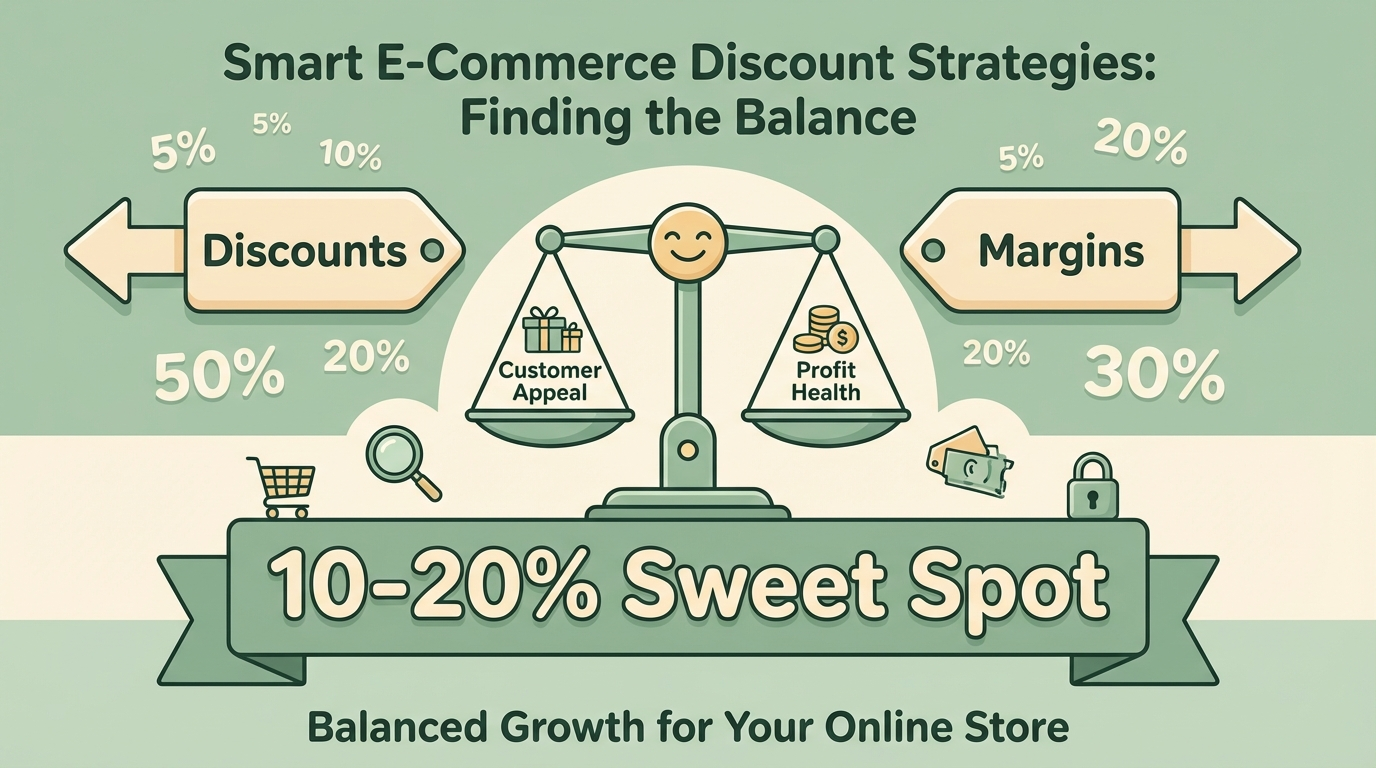
Discounts are a double-edged sword. Used strategically, they accelerate sales and clear inventory. Used carelessly, they train customers to never pay full price and erode your profit margins.
The key isn't whether to discount—it's when, how much, and for whom. This guide covers the strategic framework for discounting that protects profitability while still driving conversions.
10-20%
Sweet Spot
Optimal discount range for most promotions
6-10%
Sales Lift
From personalized discounts
50%+
Engagement Boost
From personalized offers
How Discounts Impact Margins
Before running any discount, understand the math. A 20% discount doesn't just reduce revenue by 20%—it hits your margin much harder.
The Margin Math
If your product sells for $100 with a 40% margin ($40 profit), here's what happens with discounts:
| Discount | Sale Price | Profit | Margin Hit | Extra Sales Needed |
|---|---|---|---|---|
| 0% | $100 | $40 | — | — |
| 10% | $90 | $30 | -25% | +33% volume |
| 20% | $80 | $20 | -50% | +100% volume |
| 30% | $70 | $10 | -75% | +300% volume |
The Hidden Cost
A 20% discount requires double the sales volume to maintain the same profit. A 30% discount requires 4x the volume. Make sure your increased conversions justify the margin loss.
Protecting Margins While Discounting
Set minimum spend thresholds
"15% off orders over $75" increases AOV to offset discount
Limit usage per customer
Prevent abuse and maintain value perception
Exclude high-margin or new products
Protect your best items from discounting
Target specific customer segments
First-time buyers, win-back campaigns, loyal customers only
Set expiration dates
Creates urgency and prevents indefinite discounting
Optimal Discount Percentages
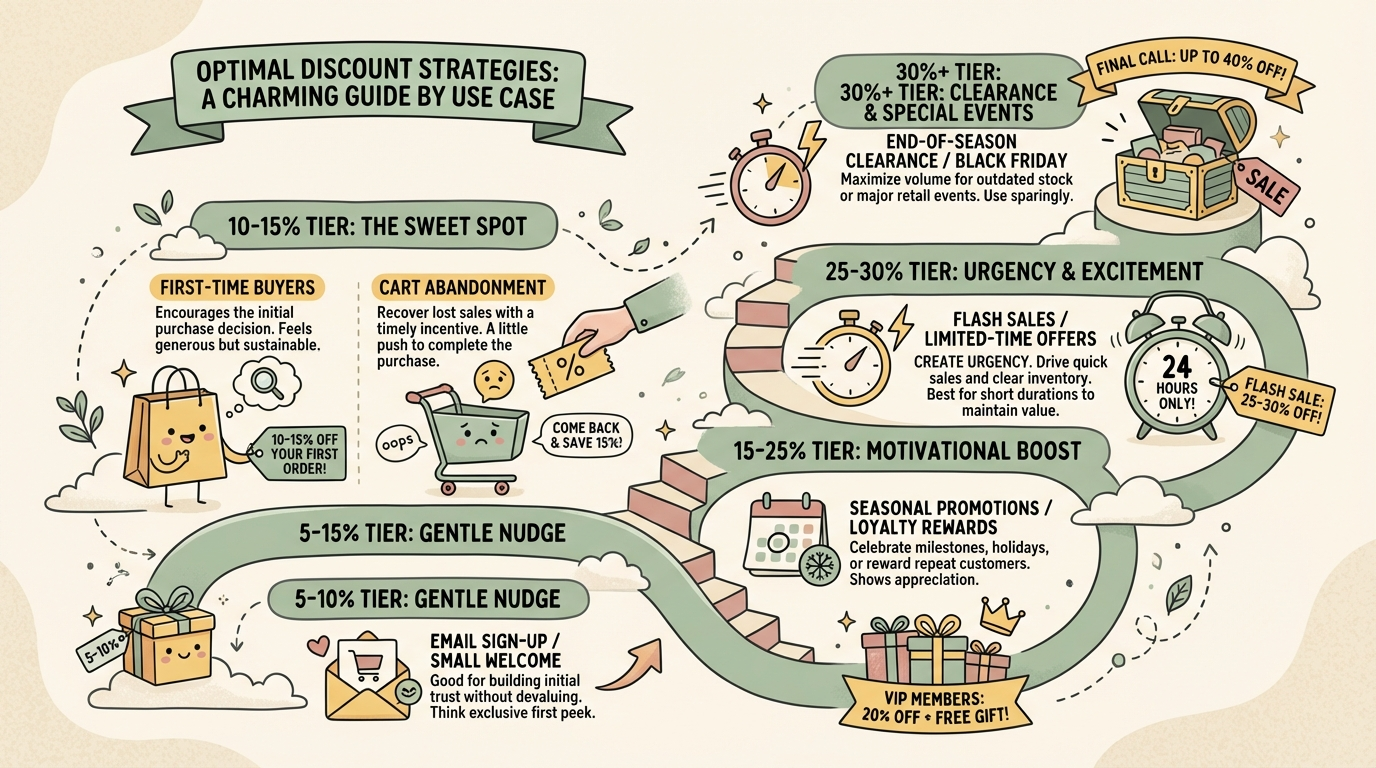
Not all discounts are created equal. Here's when to use each level:
| Discount Level | Best For | Risk Level |
|---|---|---|
| 5-10% | First-time buyers, newsletter signup, minor nudges | Low |
| 10-15% | Cart abandonment recovery, loyalty rewards | Low-Medium |
| 15-20% | Seasonal promotions, bundle incentives, BFCM | Medium |
| 25-30% | Flash sales, inventory clearance, end-of-season | High |
| 30%+ | Last-unit clearance, damaged/returned inventory only | Very High |
The 10-20% Sweet Spot
Research shows 10-20% discounts hit the psychological sweet spot—compelling enough to drive action without significantly devaluing your products or destroying margins.
First-Time Buyer Discounts
10-15% for first purchases is standard. Higher discounts may attract bargain hunters who never return. Consider offering store credit for repeat purchases instead of deep first-order discounts.
Abandonment Recovery
Start your cart recovery sequence without discounts. Only offer 10% in your final email to customers who haven't converted—this avoids training everyone to abandon carts for discounts.
Types of Discounts
Percentage vs. Flat Amount
| Type | Best For | Psychology |
|---|---|---|
| Percentage Off | Higher-priced items ($100+) | "20% off" feels bigger on expensive items |
| Flat Amount | Lower-priced items (under $100) | "$20 off" is more tangible than "20% off $50" |
Rule of 100: If price is under $100, use dollar amounts. Over $100, use percentages. Whichever number is bigger feels like a better deal[1].
Other Discount Types
Free shipping threshold
"Free shipping on orders over $50"—increases AOV without product discounts
Buy X Get Y
"Buy 2, get 1 free"—moves inventory while feeling generous
Tiered discounts
"10% off $50, 15% off $75, 20% off $100"—rewards bigger orders
Bundle discounts
"Save 20% when you buy the set"—see our bundling guide
Automatic discounts
Applied at checkout without codes—higher uptake rates
For bundle strategies, see our complete Shopify bundling guide.
Psychology of Discounts

FOMO (Fear of Missing Out)
Time-limited offers trigger urgency. Flash sales (24-48 hours) with countdown timers consistently outperform open-ended discounts.
- "24 hours only: 20% off everything"
- "Ends at midnight tonight"
- "Only 3 left at this price"
Anchoring
Always show the original price struck through next to the sale price. The "anchor" makes the discount feel more valuable, even if customers never intended to pay full price.
Personalization
Personalized discounts (birthday offers, behavior-based) feel like exclusive rewards rather than generic sales. They drive 50%+ higher engagement than broadcast discounts[2].
Loss Aversion
People hate losing more than they like gaining. Frame discounts as "Don't miss your $20 savings" rather than "Get $20 off." Expiring discounts leverage this powerfully.
The Personalization Advantage
AI-powered personalization can identify which customers need discounts to convert and which will buy at full price. This protects margins while still capturing price-sensitive customers. See how Upsella uses AI for personalized post-purchase offers.
When NOT to Discount
Sometimes the best discount strategy is no discount. Here's when to hold the line:
Pros
Cons
- Premium or luxury products—discounts cheapen brand perception
- New product launches—establish value before discounting
- Indefinite or always-on sales—trains customers to never pay full price
- When competitors are racing to the bottom—differentiate on value instead
- High-margin products that sell well at full price
- During peak loyalty periods—reward points instead of discounts
- When you can't handle increased volume
Signs You're Over-Discounting
Customers only buy during sales
You've trained them to wait for discounts
Full-price conversion rate is dropping
Price anchoring is working against you
Margins are shrinking faster than volume is growing
The math isn't working
Discount codes are everywhere online
You've lost control of your pricing
The Discount Trap
Once customers expect discounts, it's extremely hard to return to full-price selling. Brands like Apple and Lululemon rarely discount—and maintain premium pricing power as a result.
Discount Alternatives
Want to drive sales without cutting prices? Try these alternatives:
Free gift with purchase
Add value instead of cutting price. "Free tote bag with orders over $75"
Loyalty points multipliers
"Double points this weekend"—drives purchases without margin loss
Free shipping thresholds
Increases AOV without product discounts
Early access
"VIP early access to new arrivals"—exclusivity without discounts
Bundle at full value
"Get the complete set" positioned as convenience, not savings
Extended warranty or service
Add value to premium purchases
Post-Purchase Value-Adds
Instead of discounting the initial sale, add value after purchase. Post-purchase SMS can offer exclusive add-ons, early access to restocks, or complementary products at full price. Learn more about post-purchase SMS strategies.
Conclusion
Strategic discounting means knowing when to use discounts, how much to offer, and—critically—when not to discount at all. The 10-20% range works for most promotions, but always calculate the volume increase you need to maintain profitability.
Protect your margins with minimum spend thresholds, customer targeting, and expiration dates. And before defaulting to discounts, consider alternatives like free gifts, loyalty multipliers, or strategic bundling.
The best discounting strategy is one you don't need to use constantly. Build enough value that customers want to buy at full price—and save discounts for strategic moments that accelerate growth without sacrificing long-term brand equity.
References
- Shopify. "Pricing Strategies, Discount Strategies and Tactics". 2024.
- Fera.ai. "How to Create a Discount Strategy on Shopify". 2024.
- Shopify. "No Discounting Strategy: How to Compete Without Cutting Prices". 2024.
- GrowthSuite. "Innovative Discount Strategies in E-commerce". 2024.
Ready to boost your revenue with SMS upsells?
Upsella automatically sends AI-powered SMS upsells after customer purchases. Start your free trial today and unlock hidden revenue effortlessly.
Related Articles
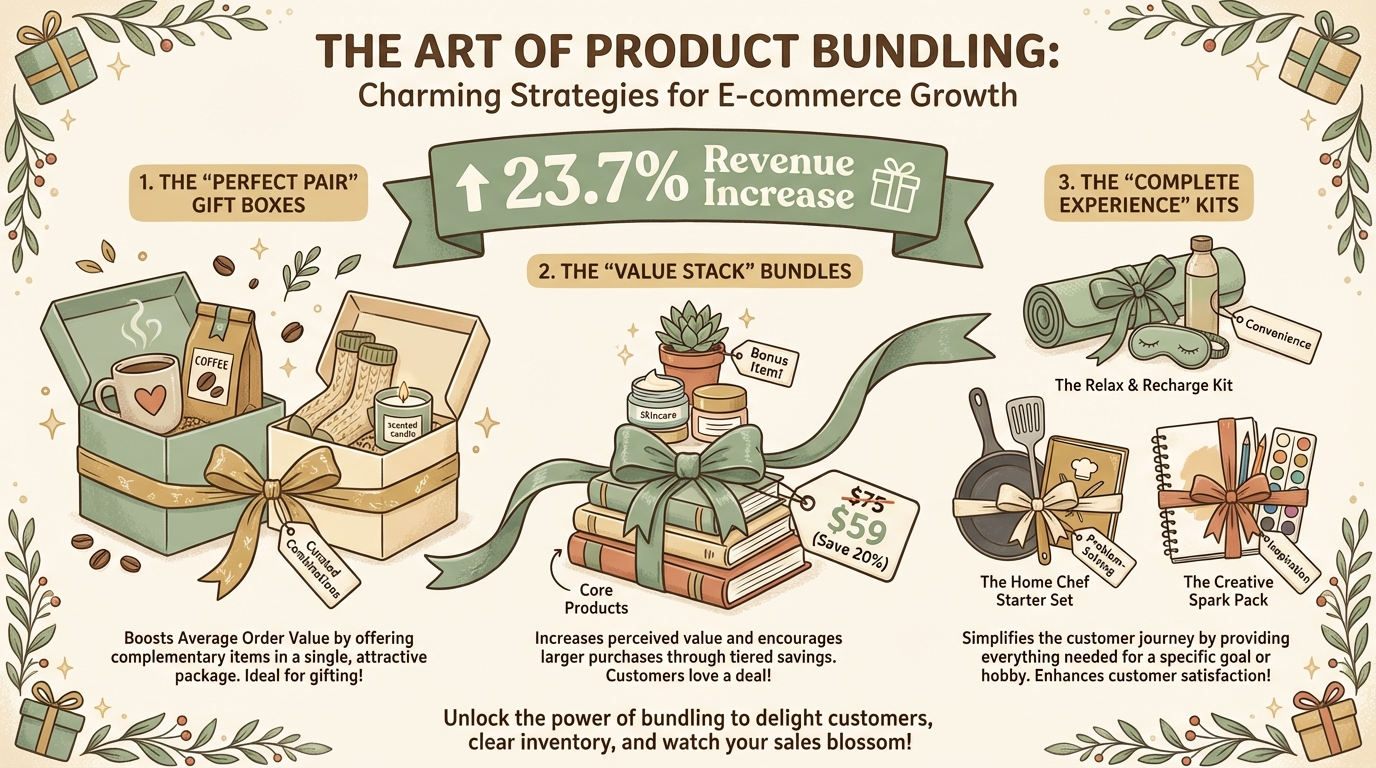
Shopify Product Bundles: Complete Guide to Bundling Strategies (2025)
Product bundling is one of the most effective ways to increase average order value. Learn the different bundle types, pricing strategies, and how to i...
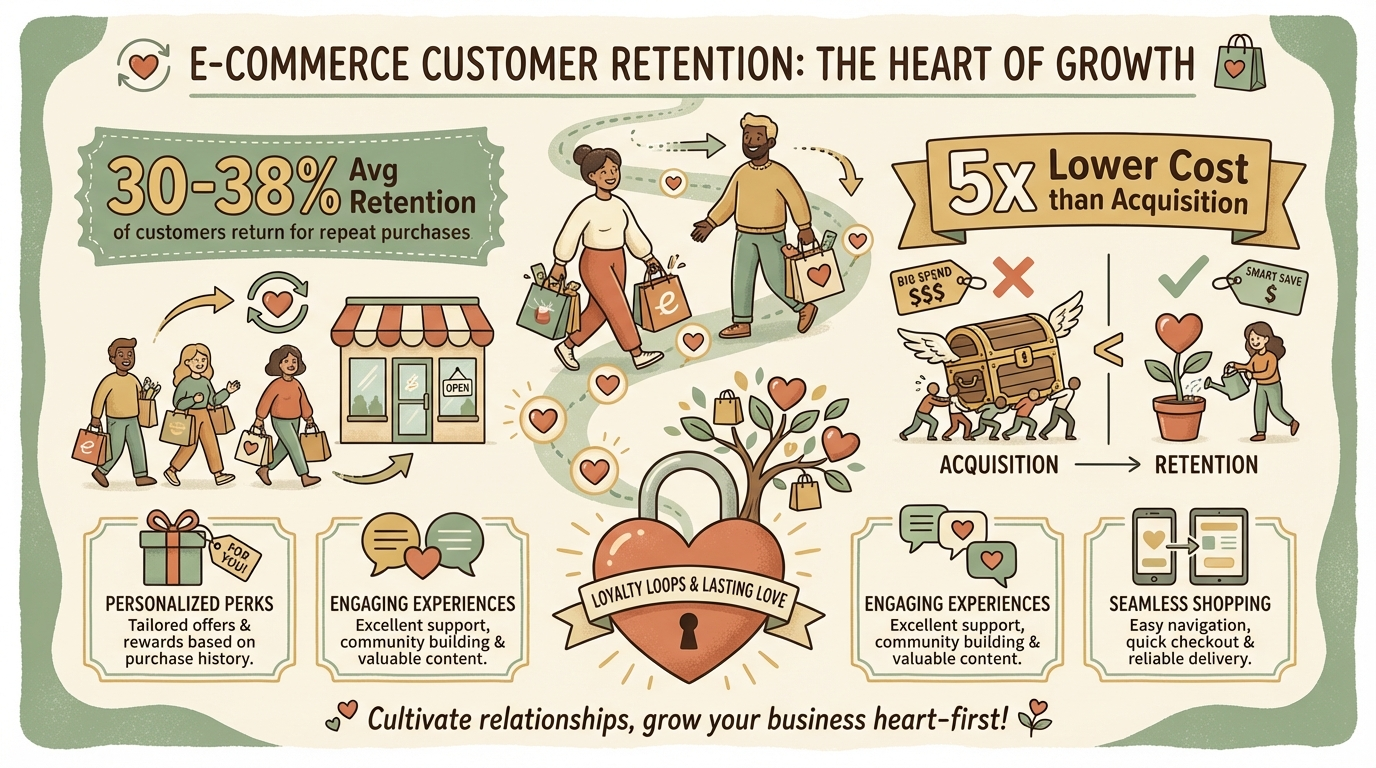
Customer Retention Rate: Benchmarks & Strategies for Shopify (2025)
Acquiring a new customer costs 5x more than keeping an existing one. Here

Shopify Profit Margins: What
Revenue means nothing if it