
SMS vs Email for Post-Purchase Upsells: Which Converts Better?
SMS has a 98% open rate compared to 20% for email. But that's not the whole story. Here's a data-driven comparison to help you choose—or use both strategically.
The Channel Battle
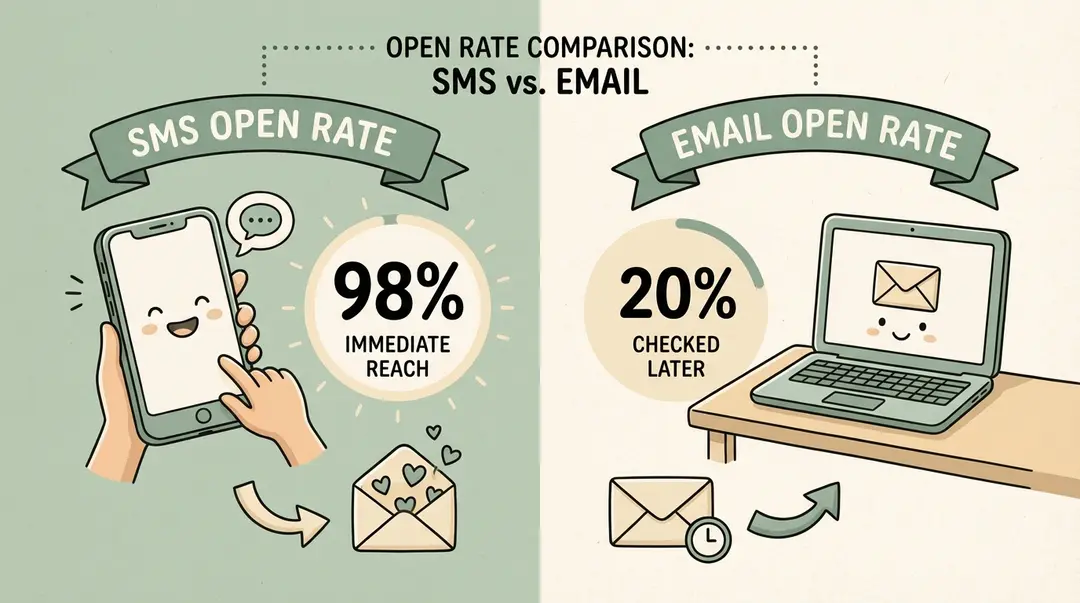
TL;DR
SMS wins on engagement: 98% open rate vs 20% for email, 21-40% conversion vs 9-15%. SMS response time is 90 seconds vs 90 minutes for email. SMS ROI is $71 per $1 vs $36-42 for email. Use SMS for immediate, time-sensitive offers; email for detailed content and long-term nurturing.
After a customer makes a purchase, you have a golden opportunity to increase their order value with additional offers. But which channel should you use—SMS or email?
Both have their strengths. Email is familiar and cost-effective. SMS is immediate and impossible to ignore. Let's look at what the data says.
98%
SMS Open Rate
Nearly every text gets read
20%
Email Open Rate
Industry average for marketing emails
$71
SMS ROI per $1
Up to 7,100% return on investment
$36
Email ROI per $1
Still strong at 3,600% ROI
90s
SMS Response Time
Average time to read a text
90m
Email Response Time
Average time to open an email
Side-by-Side Comparison
| Metric | SMS | |
|---|---|---|
| Open rate | 98% | 20-28% |
| Click-through rate | 19-20% | 0.77-4.36% |
| Conversion rate | 21-40% | 9-15% |
| Response time | 90 seconds | 90 minutes |
| ROI | $71 per $1 | $36-42 per $1 |
| Cost per message | $0.01-0.05 | $0.001-0.003 |
| Content length | 160 characters | Unlimited |
Sources: Omnisend[1], Mailmodo[2], WebFX[3]
Pros
- 98% open rate vs 20% for email
- 60x faster response time (90 sec vs 90 min)
- 21-40% conversion rate for upsells
- $71 ROI per $1 spent
- No spam folder—messages arrive directly
- Perfect for time-sensitive offers
Cons
- Higher cost per message ($0.01-0.05)
- Limited to 160 characters
- Requires explicit opt-in consent
- Customers expect fewer texts than emails
- Not ideal for detailed product info
Open Rates: SMS Dominates
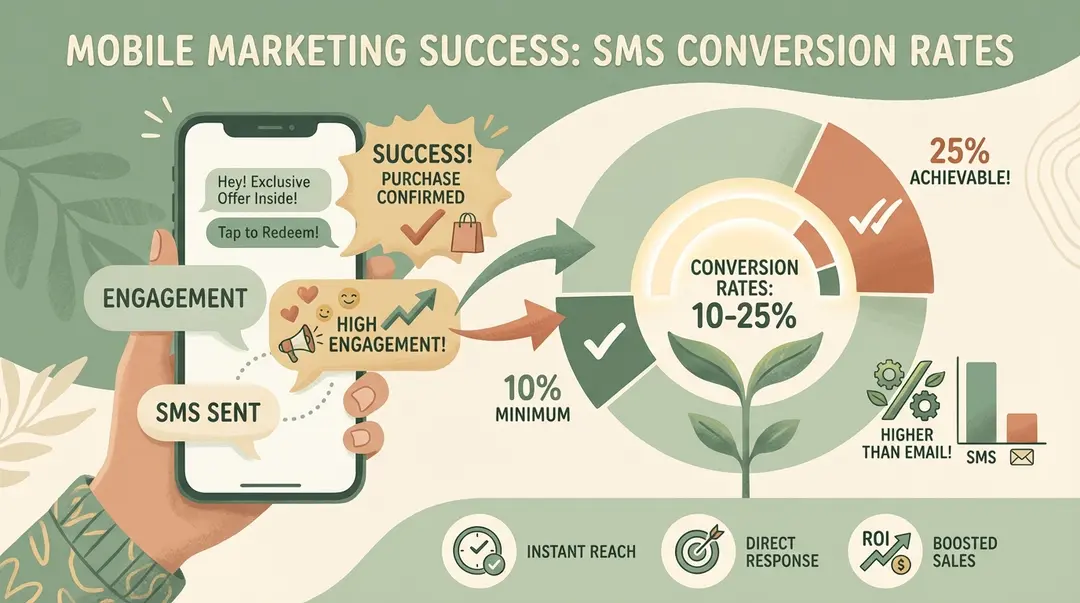
SMS achieves open rates of 90-98%—almost every message gets read[1]. Email, by contrast, averages 20-28% open rates.
Why the massive difference?
SMS notifications are harder to ignore
They appear on the lock screen and trigger immediate attention
No spam folder
SMS messages arrive directly in the inbox without filtering
Fewer messages
People receive fewer texts than emails, so each stands out more
Personal device
Phones are always within reach, typically checked within minutes
Time to Open
90% of SMS messages are read within 3 minutes[4]. Email responses take an average of 90 minutes—and many are never opened at all.
Pro Tip
Turn every order into more revenue
Upsella uses AI to send personalized SMS upsells after each purchase. Shopify stores see 15-25% more revenue from existing customers.
Conversion Rates: SMS Wins Again
For post-purchase upsells specifically:
Post-Purchase Email Stats
Post-purchase emails do perform better than regular promotional emails[5]:
- 217% higher open rates than standard emails
- Upsell emails: 61.7% open rate, 9.16% conversion rate
- Cart abandonment emails: 44.76% open rate, ~7% conversion
SMS Cart Recovery
For abandoned cart recovery, SMS converts at 24.6-39.4%, while email converts around 7%[6]. That's 3-5x higher conversion for SMS.
The Conversion Gap
ROI Comparison
Both channels deliver strong returns, but SMS edges ahead (see our detailed SMS ROI statistics for more data):
- SMS: $45-71 return per $1 spent (up to 7,100% ROI)[3]
- Email: $36-42 return per $1 spent (3,600-4,200% ROI)[7]
The higher ROI for SMS comes from better engagement metrics. Even though SMS costs more per message, the conversion rates more than compensate.
“SMS marketing delivers 2x the ROI of email for post-purchase upsells, making it the most effective channel for immediate revenue growth.”
Timing & Response Speed
SMS is designed for immediacy:
- Average response time: 90 seconds
- 90% read within 3 minutes
- Ideal for time-sensitive offers
Email is better for less urgent communication:
- Average response time: 90 minutes
- Often batch-checked 2-3 times per day
- Better for detailed content customers can review later
For Post-Purchase Upsells
The immediacy of SMS is valuable for post-purchase moments when customers are excited about their order. A text saying "Thanks for your order! Add this matching item for 20% off" arrives while the purchase is still fresh.
Timing Matters
Cost Comparison
Email is significantly cheaper per message[2]:
- Email: $0.001-0.003 per message
- SMS: $0.01-0.05 per message
Example: 10,000 Messages
| Channel | Cost | Opens | Conversions (est.) |
|---|---|---|---|
| $10-30 | 2,000-2,800 | 180-420 | |
| SMS | $100-500 | 9,000-9,800 | 2,100-3,900 |
SMS costs more upfront but delivers 5-10x more conversions. If your average upsell value is $25, SMS generates $52,500-97,500 in revenue vs email's $4,500-10,500—easily justifying the higher per-message cost.
Cost-Effectiveness
When to Use SMS for Upsells
SMS excels in these scenarios:
Time-Sensitive Offers
"Your 20% off expires in 2 hours" – SMS ensures they see it in time
Post-Purchase Follow-Up
Reaching customers right after purchase, when excitement is high. This is exactly what Upsella is built for.
Order Updates + Upsells
"Your order shipped! While you wait, here's a special offer..."
High-Value Customers
VIP customers who warrant the higher per-message cost
Cart Abandonment Recovery
When someone leaves items in their cart, SMS gets their attention faster
When to Use Email for Upsells
Email is better for:
Detailed Product Information
When the upsell requires explanation, images, or comparison charts
Long-Form Content
Educational content about complementary products, how-to guides, etc.
Large Subscriber Lists
When cost is a primary concern and you're messaging thousands of people
Non-Urgent Follow-Ups
Product recommendations days or weeks after purchase
Customers Who Prefer Email
Some customers don't want text messages from brands. Respect their preference.
The Best Approach: Use Both Strategically
The data is clear: SMS outperforms email for engagement and conversion. But the optimal strategy isn't choosing one—it's using both where they're strongest[3].
Key Insight
Recommended Strategy
| Timing | Channel | Message Type |
|---|---|---|
| Immediately post-purchase | SMS | One-click upsell offer |
| Order shipped | SMS | Tracking + related product |
| Order delivered | SMS | Review request + upsell |
| 1 week later | Detailed product guide | |
| 2-4 weeks later | Restock reminder / new arrivals |
Key Principle
SMS for urgency and attention. Email for depth and detail.
Customers tolerate daily emails but not daily texts[2]. Use SMS sparingly for high-impact moments; use email for regular communication.
Don't Over-Text
How Upsella Fits In
Upsella handles the SMS side automatically:
- AI analyzes each purchase to recommend relevant products
- Messages sent at optimal moments (checkout, shipping, delivery)
- One-tap purchase links for frictionless buying
- Runs independently once configured
Pair Upsella with your existing email flows for a complete post-purchase strategy.
Frequently Asked Questions
Is SMS or email better for post-purchase upsells?
SMS outperforms email: 98% open rate vs 20%, 21-40% conversion vs 9-15%, $71 ROI per $1 vs $36-42. For immediate, time-sensitive offers, SMS wins. For detailed product information, email is better.
How fast do people respond to SMS vs email?
SMS average response time is 90 seconds. Email average is 90 minutes. 90% of SMS messages are read within 3 minutes.
Is SMS marketing more expensive than email?
Per message, yes: SMS costs $0.01-0.05 vs $0.001-0.003 for email. But SMS delivers 5-10x more conversions, so cost per conversion is often lower with SMS.
Should I use both SMS and email?
Yes. Use SMS for immediate high-impact moments (post-purchase, shipping updates, delivery). Use email for detailed content, product guides, and long-term nurturing. The best results come from combining both strategically.
How many texts per month is acceptable?
Customers tolerate 2-4 SMS messages per month. More than that leads to unsubscribes. Reserve SMS for your most important, time-sensitive offers.
Conclusion
The numbers don't lie: SMS dramatically outperforms email for engagement and conversion. With 98% open rates, 21-40% conversion rates, and 60x faster response times, SMS is the superior channel for time-sensitive post-purchase upsells.
Key takeaways:
- SMS: 98% open rate vs email's 20%
- SMS: 21-40% conversion vs email's 9-15%
- SMS: $71 ROI per $1 vs email's $36-42
- Use SMS for immediate post-purchase moments
- Use email for detailed content and long-term nurturing
- The best results come from combining both strategically
For post-purchase upselling specifically, Upsella's AI-powered SMS delivers the immediacy and personalization that drives conversions. Start your free trial to see the difference.
References
- Omnisend. "SMS Marketing Data 2025: Key Stats & Benchmarks". 2025.
- Mailmodo. "17 SMS vs Email Statistics to Know". 2025.
- WebFX. "SMS vs. Email Marketing: Which Drives the Best Results?". 2025.
- OptiMonk. "43 SMS Marketing Statistics". 2026.
- LiveRecover. "Email Marketing vs Text Message Marketing". 2025.
- Notifyre. "SMS Marketing Statistics 2025". 2025.
- GetWPFunnels. "SMS vs Email Marketing - Which One to Choose?". 2025.
Ready to boost your revenue with SMS upsells?
Upsella automatically sends AI-powered SMS upsells after customer purchases. Start your free trial today and unlock hidden revenue effortlessly.
Related Articles
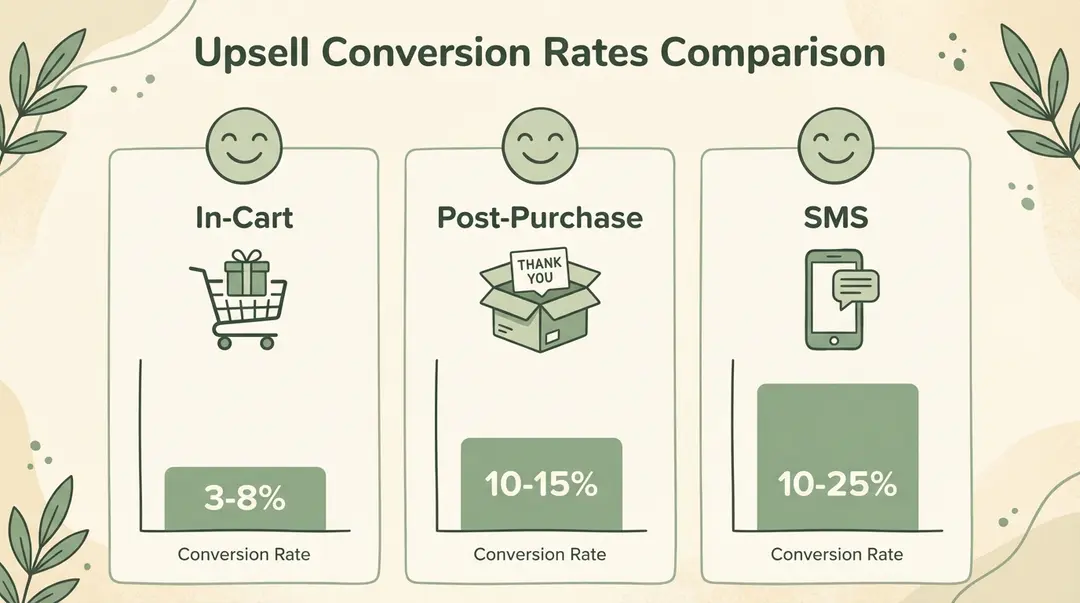
Shopify Upsell Apps Comparison: In-Cart vs Post-Purchase vs SMS (2026)
Not all upsell apps work the same way. Learn the key differences between in-cart, post-purchase, and SMS upselling—and which strategy maximizes revenu...
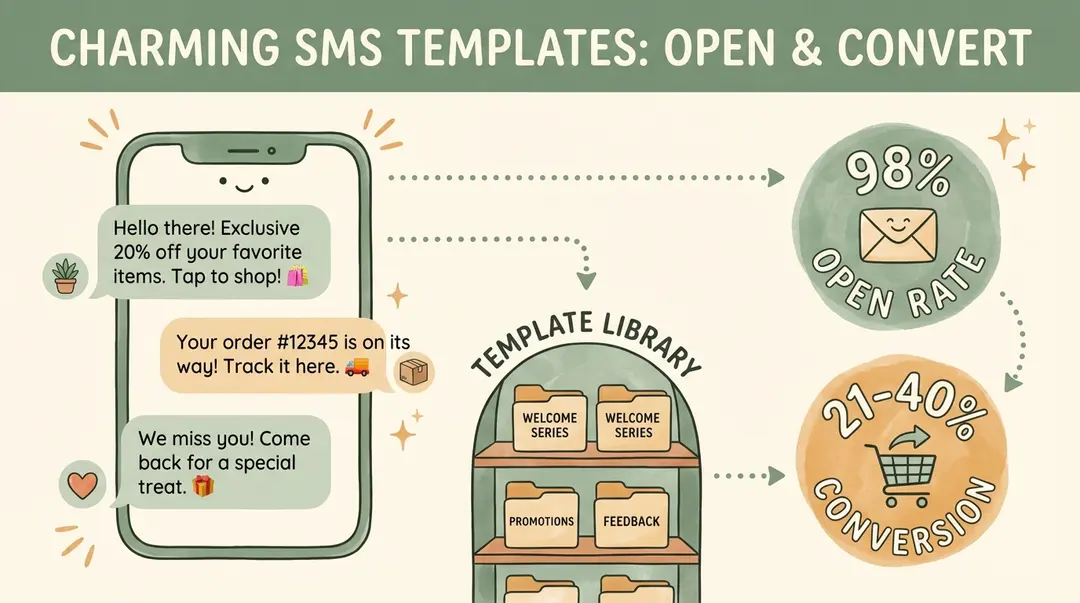
5 Post-Purchase SMS Templates That Convert (Copy & Use)
Copy these proven SMS templates for upselling after purchase. Each template is designed for a specific moment in the customer journey, with personaliz...
SMS Marketing ROI: The Numbers Behind the Hype (2026 Data)
Everyone talks about how effective SMS is, but what do the numbers actually say? Here