Best Free Upsell Options for Shopify Stores
You don't need expensive apps to start upselling. Here are the best free options, no-code tricks, and budget-friendly approaches to boost your average order value.
Why Free Matters (At First)

Not every store needs a $99/month upsell app on day one. If you're just starting out, testing the waters, or running a lean operation, free and low-cost options let you validate the strategy before investing.
10-30%
Revenue Increase
Average boost from upselling
$0
Starting Cost
Free plans and no-code methods
5%+
AOV Increase
From basic shipping upsells
Upselling can increase revenue by 10-30%[1]. Even basic implementations can move the needle on average order value (AOV). Let's explore what you can do without spending money—and when it makes sense to upgrade.
Free Upsell Apps with Generous Plans
Several Shopify upsell apps offer functional free tiers. They typically limit order volume or features, but work well for smaller stores.
Start Small, Scale Later
1. ReConvert (Free Plan)
ReConvert's free plan covers stores with up to 49 orders/month. It includes thank-you page customization, countdown timers, and basic upsell widgets[2].
Best for: New stores testing post-purchase upsells
Limitation: 49 orders/month cap
Paid plans: Start at $4.99/month
2. Selleasy (Free Plan)
Selleasy offers a free tier for stores under 100 orders/month. Includes frequently bought together bundles, cart upsells, and post-purchase offers[3].
Best for: Stores wanting multiple upsell types in one app
Limitation: 100 orders/month cap
Paid plans: Start at $8.99/month
3. Bold Upsell (Limited Free Features)
Bold offers a free 14-day trial. While there's no permanent free plan, it's worth testing to benchmark against other options. Paid plans start at $9.99/month[4].
4. Frequently Bought Together (Free Tier)
Specifically for "Amazon-style" bundle recommendations. The free plan supports stores with limited product catalogs.
Comparison Table
| App | Free Tier Limit | Upsell Types | Starting Paid Price |
|---|---|---|---|
| ReConvert | 49 orders/month | Post-purchase, thank-you page | $4.99/month |
| Selleasy | 100 orders/month | Cart, post-purchase, bundles | $8.99/month |
| Bold Upsell | 14-day trial only | Cart popups, in-cart | $9.99/month |
Upsell Without Any App
Before installing anything, try these built-in Shopify features and manual strategies:
1. Shipping Rate Upsells
Create premium shipping options that include add-ons. For example[5]:
- Standard Shipping: $5.99
- Priority + Gift Wrapping: $12.99
- Express + Extended Warranty: $19.99
No App Required
2. Product Page Recommendations
Use Shopify's built-in "Related Products" section or create manual collections that appear on product pages. No app needed—just theme customization.
Access Theme Editor
Go to Online Store → Themes → Customize
Navigate to Product Page
Select the Product page template from the dropdown
Add Related Products Section
Add a 'Featured Collection' or 'Related Products' section
Configure Products
Choose which complementary items to show
3. Cart Page Cross-Sells
Many Shopify themes support adding product sections to the cart page. Show a curated selection of add-ons before checkout.
4. Email Follow-Ups
Use Shopify Email (free for first 10,000 emails/month) to send post-purchase product recommendations manually. Less automated than apps, but zero cost.
5. Bundle Products Manually
Create product variants that include bundles at a discount. For example:
- Single item: $29
- 2-pack (save 10%): $52
- 3-pack (save 15%): $74
No app required—just variant pricing.
Apps with Free Trials Worth Testing
If you're ready to test more advanced features, these apps offer meaningful free trials:
AfterSell (30-Day Free Trial)
Build multi-step upsell funnels with downsells. Integrates with Shopify checkout (Plus) and thank-you pages (all plans). Free trial gives full access to evaluate ROI.
Candy Rack (14-Day Free Trial)
One-click upsell popups. Clean UI and good customization options. Paid plans start at $29.99/month[6].
Upsella (Free Trial)
Upsella offers a free trial for AI-powered SMS upsells. Unlike widget-based apps, Upsella reaches customers after they leave your site via personalized text messages.
What makes it different:
AI product matching
Automatically recommends products based on purchase history
One-tap purchase links
Frictionless buying from any SMS
Flexible timing
Send at checkout, shipping, delivery, or custom schedules
Works on any Shopify plan
No Plus requirement
See pricing details and start your trial from the Shopify App Store.
When Free Isn't Enough
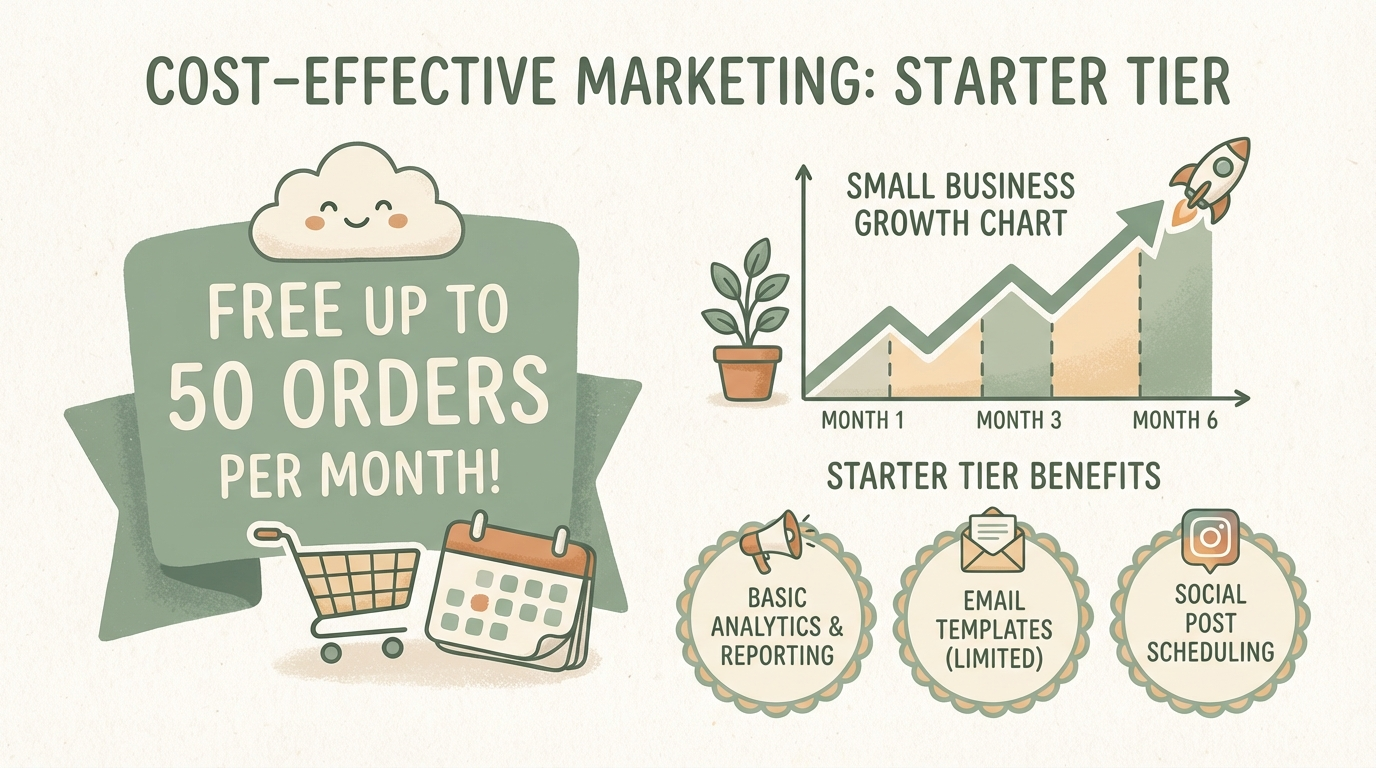
Free plans work well for testing and low-volume stores. But here's when it makes sense to upgrade:
Pros
- Zero upfront cost to validate upselling
- Good for stores under 100 orders/month
- Basic features cover essentials
- Perfect for testing different approaches
Cons
- Order limits restrict growth
- Manual strategies require ongoing work
- No AI personalization
- Miss off-site opportunities
You're Hitting Order Limits
If you consistently exceed 100 orders/month, you're outgrowing free tiers. The ROI from upselling typically far exceeds app costs at this volume.
You Need Automation
Manual strategies (email follow-ups, shipping rates) require ongoing work. Automated apps run 24/7 without your involvement.
Automation Saves Time
You Want AI Personalization
Free apps use rule-based targeting. AI-powered apps like Upsella automatically match products to customer behavior—no manual configuration needed.
You're Missing Off-Site Opportunities
Widget-based upsells only work while customers are on your site. SMS upsells (like Upsella) reach customers after they leave, extending your revenue window.
Quick ROI Calculation
“If an app costs $30/month and increases your AOV by $5 on just 10 orders, that's $50 in additional revenue—already profitable. At scale, the math gets much better.”
Conclusion
Free upsell options are a great starting point. Use ReConvert or Selleasy's free tiers to test the waters, or implement no-code strategies like shipping rate upsells immediately.
As you grow, consider upgrading to tools that offer automation, AI personalization, and off-site reach. Upsella's SMS approach complements any widget-based strategy by capturing revenue after customers leave your store.
Next Steps
For a deeper comparison of all upsell methods, read our upsell apps comparison guide, or learn how to set up post-purchase upsells step by step.
References
- [1] OptiMonk. "Best Upsell Apps for Shopify". February 2025.
- [2] Amasty. "The 10 Best Upsell Apps for Shopify". January 2025.
- [3] Logbase. "12 Best Upsell Apps for Shopify in 2025". June 2025.
- [4] Fast Bundle. "+20 Best Upsell Apps for Shopify Store in 2025". December 2025.
- [5] Digismoothie. "How to Upsell in Shopify Checkout with NO App and for FREE". 2025.
- [6] Digismoothie. "Top 12 Best Shopify Apps for Upsell and Cross-Sell". 2025.
Ready to boost your revenue with SMS upsells?
Upsella automatically sends AI-powered SMS upsells after customer purchases. Start your free trial today and unlock hidden revenue effortlessly.